

The First Digital Nation (2023)
As the climate crisis worsens, the island country of Tuvalu announces its moves towards the virtual world as its physical territory is threatened.
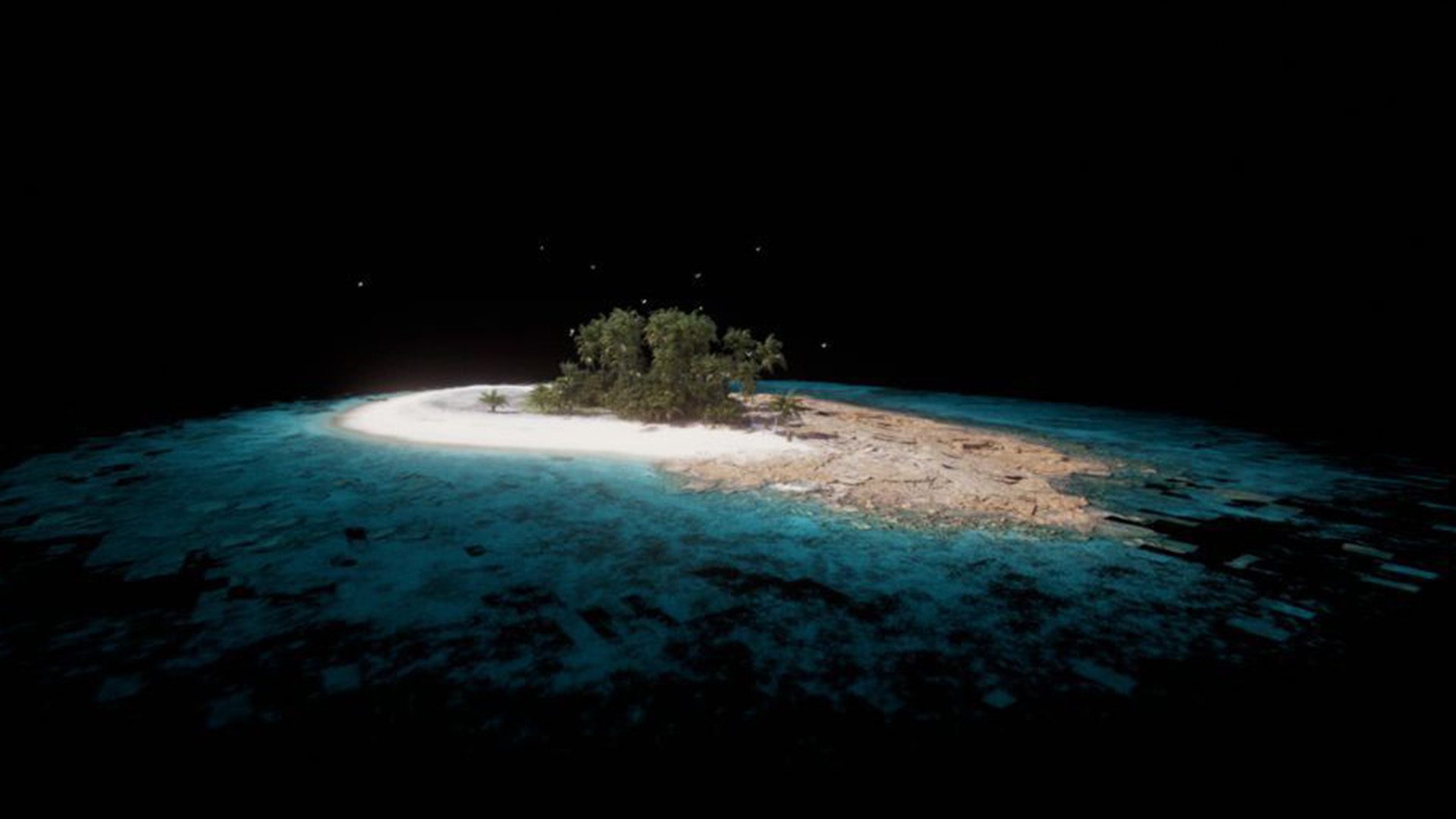
Tuvalu, a low-lying Pacific nation, is facing a serious challenge. If sea levels continue to rise at the current rate, the entire country will be submerged in a matter of decades – and will become unlivable well before then. Tuvaluan minister Simon Kofe was scheduled to speak at COP27, the UN Climate Change Conference. It was expected to be a typical diplomatic address to the assembled delegates and reporters. However, Minister Kofe used the moment to unveil a radical plan for survival: Tuvalu will become the world’s first digital nation.
By recreating Tuvalu in the metaverse, piece-by-piece, the country can preserve its culture, history, and government services, long after its land disappears. But the Digital Nation is more than just an archive. International law currently dictates that a country needs a “defined physical territory” to exist, so Tuvalu risks becoming the first country to lose its sovereignty due to climate change. The digital nation is at the center of the fight for a new definition of statehood under international law, a way to protect Tuvalu’s sovereignty and place on the world stage.
For Pacifika people, connection to physical land is everything. It is not just home. Land contains the ‘mana’ of the people, which means not just the memories of those who have lived before, but a vital spirit that lives in place. To be facing a reality with only a digital memory of it is a tragic and traumatic thing to contemplate. But one that Minister Kofe is mindful of could help Tuvaluans maintain a connection to each other, should they be displaced and disconnected from the country they call home. However, Minister Simon Kofe and his team are also adamant that Pacific nations should not be viewed solely as victims of climate change, they can be a powerful voice for change, to lead on matters of both mitigation and adaptation locally and globally. A key value of Tuvaluan people is ‘Kaitasi’, or ‘what happens in one place affects another’. It’s for this reason that Minister Kofe has always aimed to appeal to the wider world for change, and not just those with decision-making powers: “We also see that culture and heritage have real value as tools to combat climate change. We see our culture not just as something threatened by sea level rises, but as something that can persuade other countries to reduce their contribution to sea level rises.” “We live with the realities of climate change, and have a responsibility to warn to forewarn the world as to what is coming ahead.”


Post a Comment